

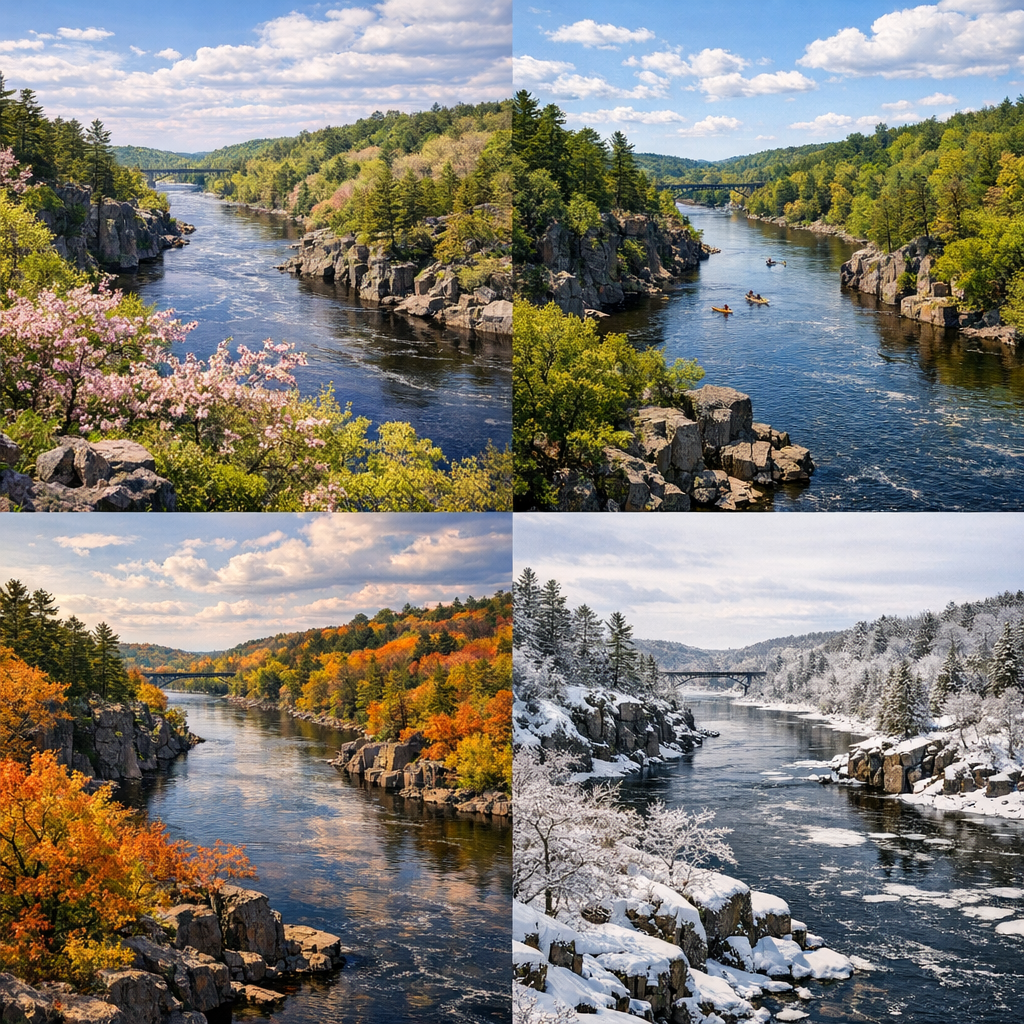
Taylors Falls, Minnesota, experiences a diverse range of weather conditions throughout the year, characteristic of a humid continental climate. This article provides an overview of the seasonal patterns and environmental factors that shape our local climate.
Seasonal Temperature Variations
The warm season in Taylors Falls spans approximately four months, from mid-May to mid-September, with average daily high temperatures exceeding 69°F. July stands out as the warmest month, boasting average highs around 81°F and lows near 60°F. Conversely, the cold season lasts about three months, from late November to early March, with average daily highs below 35°F. January is typically the coldest month, featuring average lows of 7°F and highs of 23°F.
Precipitation and Snowfall
Annual precipitation in Taylors Falls averages around 31 inches, encompassing both rain and the liquid equivalent of snow. July is the wettest month, receiving an average of 4.3 inches of precipitation. Snowfall is a significant component of our winter months, with the first measurable snowfall usually occurring in November and the last in April. December often records the highest snowfall, averaging 11.2 inches, contributing to an annual total of approximately 44 inches.
Humidity and Comfort Levels
Humidity levels fluctuate throughout the year. The most humid month is January, with an average relative humidity of 92%. In contrast, April is the least humid month, averaging 75% relative humidity. During the summer months, the humidity remains comfortable, enhancing the appeal of outdoor activities.
Environmental Considerations
Situated within the Lower St. Croix Watershed, Taylors Falls is part of a region where all streams flow directly into the St. Croix River or Lake St. Croix. The area is predominantly agricultural, but increasing development poses challenges related to surface water quality, groundwater management, and wetland preservation. As the Twin Cities metropolitan area expands, it’s crucial to balance growth with environmental stewardship to maintain the health of our waterways and natural habitats.
Understanding these climatic and environmental factors is essential for residents and visitors alike, aiding in preparedness and fostering a deeper appreciation for the natural beauty of Taylors Falls.