

Taylors Falls, Minnesota, experiences a diverse range of weather conditions throughout the year, characteristic of a humid continental climate. This article provides an overview of the seasonal patterns and environmental factors that shape our local climate.
Winter: Cold and Snowy
Winters in Taylors Falls are notably cold and snowy. January, the coldest month, sees average high temperatures around 23°F (-5°C) and lows near 7°F (-14°C). Snowfall is common, with the area receiving approximately 22 inches (56 cm) of snow annually. The season typically spans from late November to early March, with temperatures occasionally dropping below -16°F (-27°C).
Spring: Gradual Warming
Spring brings a gradual increase in temperatures and daylight. By April, average highs reach 57°F (14°C), and lows are around 36°F (2°C). This season also marks an increase in precipitation, averaging 2.83 inches (72 mm) in April, contributing to the lush greenery and blooming flora characteristic of the area.
Summer: Warm and Humid
Summers are warm and can be humid, with July being the warmest month. Average high temperatures peak at 81°F (27°C), and lows hover around 60°F (16°C). The area receives the most rainfall during this season, with July averaging 4.29 inches (109 mm) of precipitation. Despite the warmth, the humidity levels remain comfortable, making it an ideal time for outdoor activities.
Fall: Crisp and Colorful
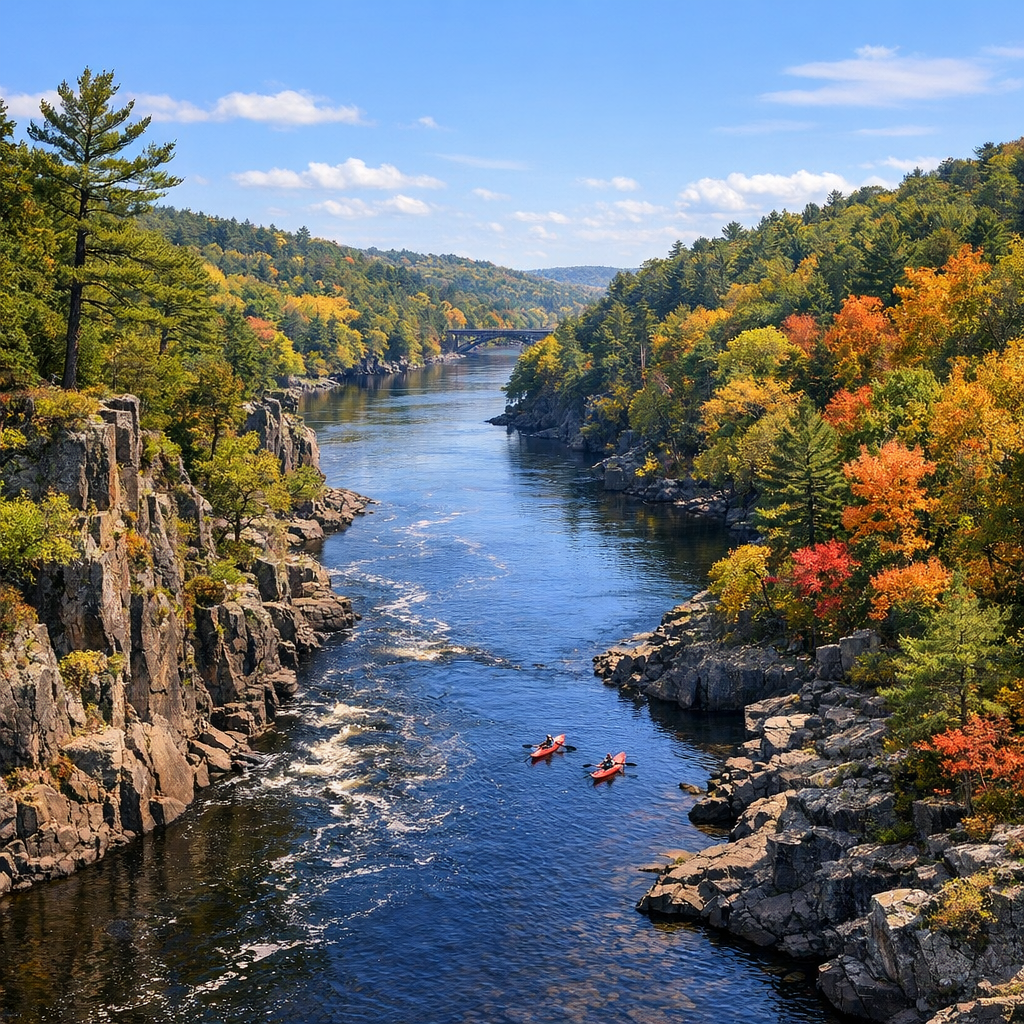
Autumn is marked by cooler temperatures and vibrant foliage. By October, average highs decrease to 56°F (13°C), and lows to 38°F (3°C). Precipitation averages 2.98 inches (76 mm) during this month. The crisp air and colorful leaves make fall a favorite season for many residents and visitors.
Environmental Considerations
The Lower St. Croix River, flowing through Taylors Falls, is a significant environmental feature. The watershed covers 585,735 acres and is influenced by both agricultural activities and increasing development. These factors contribute to concerns about surface water quality, groundwater quality and quantity, as well as stormwater and wetland management. Ongoing efforts aim to balance development with environmental preservation to maintain the health of this vital ecosystem.
Understanding these seasonal patterns and environmental factors is essential for residents and visitors to appreciate the natural beauty and challenges of Taylors Falls throughout the year.